Colour variation in granite: why one block is never one shade
Two containers of the same granite rarely match exactly. What varies between them, what a buyer can actually control, and what to agree in writing before the order.
6 October 2026 · 9 min read · GranTerra Stone, Hui'an
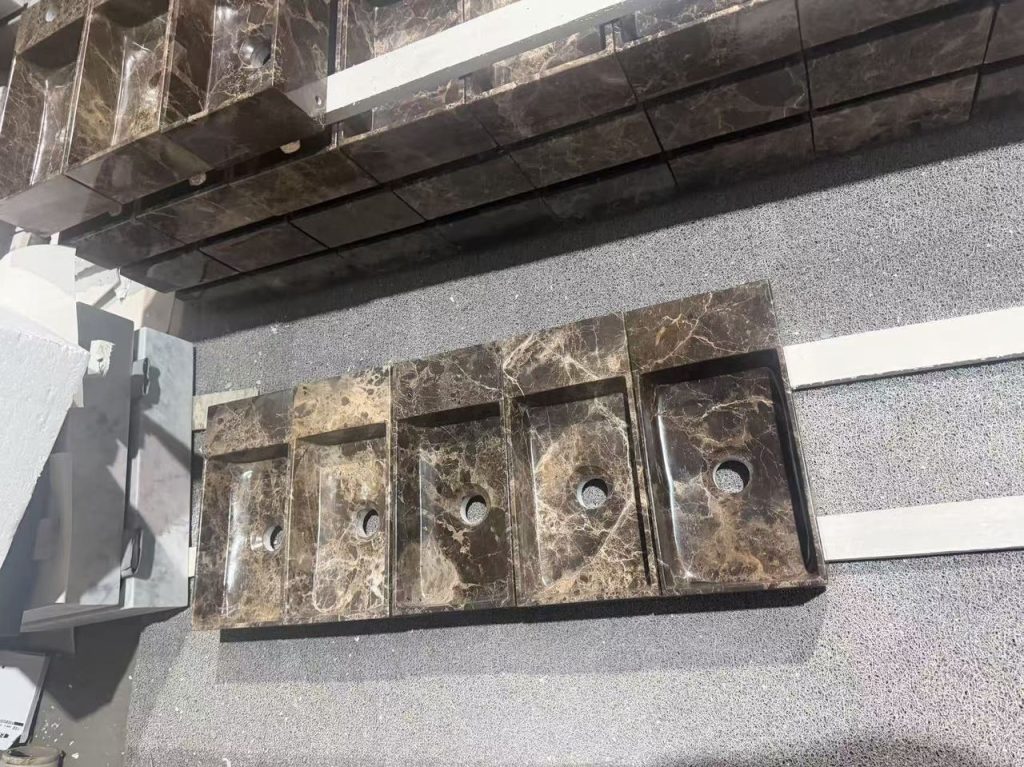
Two containers of the same granite arrive six weeks apart. One reads as a warm mid-grey. The other reads cool and slightly blue. The sample both were ordered against sits somewhere in between, and now sits on a shelf as evidence in a meeting neither side enjoys.
This is the oldest argument in the stone trade, and it is almost never caused by anyone being dishonest. It is caused by the fact that “the same granite” is not one colour. It is a range. The only real question is whether that range was defined before the order or argued about afterwards.
Why two containers never match exactly
Stone is not manufactured. It is extracted, and the colour comes from minerals that were mixed by geology rather than by a formula. A granite is typically feldspar, quartz and mica in varying proportions, with darker minerals deciding how light or dark the overall stone reads. Change the proportion of one mineral by a few per cent and the same quarry, the same seam and the same quarry name will give you stone that looks like a different material.
That variation does not stop at the quarry gate. It continues inside the block. A single block of granite can run from lighter to darker across its own length, and the difference is often most visible exactly where you want it least — on a large, uninterrupted surface such as a counter or a wall panel.
So when two shipments differ, the honest explanation is usually not that the wrong stone was sent. It is that two different parts of a quarry were cut, and nobody agreed in advance how much difference was acceptable between them.
What is actually varying
Buyers tend to treat colour as a single property. In practice three things move independently, and confusing them is what turns a minor difference into a dispute.
Body colour is the overall tone of the stone — the light grey, the beige, the near-black. This is the one people mean when they say the shipment is “the wrong colour”. It is set by the mineral mix and by which part of the seam was cut.
Movement and veining is the pattern: the swirls, the bands, the veins. Two pieces can be an exact body colour match and still look completely unrelated because one is quiet and the other is heavily marked. On a book-matched wall this is the entire point of the material; on a floor it is what makes one room look calm and the next look busy.
Surface and light changes the same stone without touching it at all. A honed finish reads flat and slightly lighter than a polished one on the identical slab, because the polished face reflects more of the room back at you. Outdoors, wet and dry stone can look like two materials: a surface that looks warm and sandy when dry will often read two or three shades darker under water. Anyone who has specified decking or coping has seen this, and it catches out buyers on paving as often as on pool surrounds. The finishes page shows how far the same stone moves once the face is honed, polished or flamed.
One practical consequence is that colour cannot be settled by email. A photograph is good at showing pattern — whether a piece is heavy or quiet, how a vein runs — and poor at showing tone. Screens vary, phone cameras correct colour without asking, and the light in a yard at four in the afternoon is not the light in a hotel lobby at eight in the evening. When tone matters, the sample has to travel, and both sides have to look at it under the same light. Treat photographs as a record of a decision rather than as the decision itself.
What the trade means by a batch
Most of the confusion in a colour argument comes from using the word “batch” to mean three different things. It is worth keeping them apart on your own paperwork.
A block is a single piece of stone lifted from the quarry. It is the smallest unit you can actually choose, and it is the unit that decides colour most strongly. When people say a stone is “from the same block”, they are making a strong claim about consistency.
A lot or production batch is a set of pieces cut together, typically from one block or from a small group of blocks that were selected as closely matching. This is the unit most suppliers mean when they promise “same batch”.
A shipment is whatever travelled in one container, and it may contain several lots. This is the unit that reaches you, and it is the one that gets compared against a sample from a completely different point in time.
When a supplier promises consistent colour, the useful follow-up is a single question: consistent within what? Within the block, within the lot, or within the shipment? The answers are very different, and only the first two are promises anyone can actually keep.
What can be controlled, and what cannot
The useful skill here is knowing which half of the problem you can push on. Trying to control the stone is wasted effort; controlling the agreement is not.
| Within your control | Not within anyone’s control |
|---|---|
| Which block is bought against your sample | The mineral mix inside the quarry itself |
| Whether the whole order is drawn from one lot | How much a single block varies end to end |
| How much shade difference you accept across a lot | How the stone reads under your site lighting |
| Reserving spare pieces for later repairs | Wet versus dry appearance on external work |
| Whether a sample is kept and dated by both sides | The colour of stone cut five years from now |
Read the right-hand column again, because most colour disputes are fought over entries in it. No supplier can promise that stone cut next year will match stone cut this year, and any supplier who does is either quoting a material they have not understood or hoping the question will not come back.
What to agree before you order
Everything below costs nothing at enquiry stage and saves an argument later. We would rather agree all of it in writing before a deposit than defend a position afterwards.
- Name the sample, and keep it. Order against a physical sample, not a photograph, and have both sides keep a piece of the same sample. A photograph on a screen has a colour temperature that neither side controls.
- Say what the order is for. A counter in a kitchen and a floor in a mall have different tolerances. Mixed veining that reads as character on a wall can read as a defect across a large floor, and we will flag that difference if we know the application.
- Agree the mixing rule up front. If several lots are needed, say whether pieces from different lots may be mixed within one room. On a large floor, the usual answer is that they should not be; on small separate areas it often does not matter.
- Decide the reserve now, not later. Ask for spare pieces from the same lot at the time of the order. Buying replacement material two years later means buying from a different part of the quarry, and it will show.
- Fix the lighting question. If the stone has to match something already installed, tell us what it must sit next to and under what light. Showroom light and daylight are not the same test.
- Write the tolerance into the order. If you need pieces to be laid in a specific arrangement for colour, tell us the arrangement so the material can be selected and packed to suit it.
How we handle colour on your order
We select blocks against your control sample rather than against a catalogue photograph, and we do it before cutting — the same block selection and two-stage QC that runs on every order — because a block that will not hold its colour across a whole container is worth rejecting before it is cut rather than after it is packed. Where an order needs more than one lot, we say so rather than letting it be discovered at installation.
We also try to be plain about the limits. We will not claim that stone from next year will match stone from this year. We will not photograph a slab in warm light and ship it to a site that is lit cool, and we will not present a visualisation as a photograph — the same rule that runs through the rest of this site. Where something is outside what we can hold, we would rather tell you at quotation stage than let it become a container that has to be argued about.
Colour is the one part of a stone order that no one can fully control. The agreement about it is the part everybody can.
Send the drawing
If you have a project where the colour has to hold, send us the drawing, the application and the sample you are matching. Tell us whether the pieces will be seen together or in separate areas, and whether there is existing stone they have to sit beside. If you want a reserve held from the same lot, say so at enquiry stage so it can be priced and packed with the main order.
The materials & colour page covers what the surfaces look like, and the seven granite finishes explains how a finish changes the reading of the same stone. If you are still deciding what you are being quoted, sorting out the family comes first. If you are still shaping the order, how a stone order is quoted covers what we need from a drawing, and the product range shows what we cut. Then send the list — we will tell you honestly what we can hold.
Every figure on this page comes from our own order sheets. Where something is a trade norm rather than a number we can hold, we say so — send a spec and we will confirm it against a real block before you commit.
More from the yard
Send the drawing. We do the rest.
Reply within one working day, in English or Chinese. Send a spec, a drawing or just a photo of the sample you are matching — we will tell you honestly whether we can hold it.
MOQ 1 × 20FT · FOB XIAMEN · SAMPLES IN 7 DAYS