A quote has a date, even if nobody writes it down
An old quote looks unchanged, but it was made on a particular day. What moves while it sits in an inbox, and the three anchors worth sending back.
13 November 2026 · 19 min read · GranTerra Stone, Hui'an
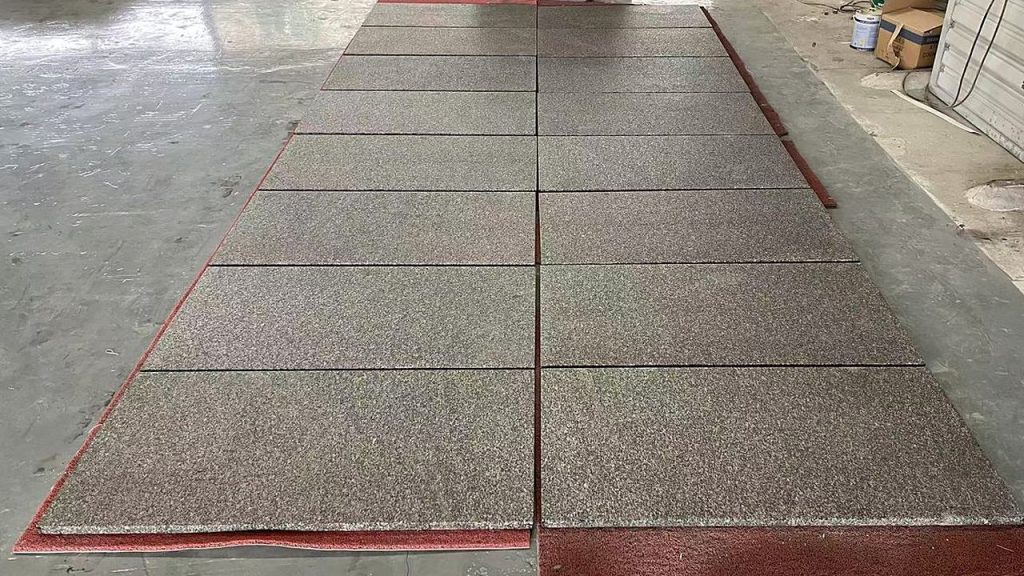
An enquiry goes out in the spring. A quote comes back. It is filed, forwarded, discussed at a meeting, folded into a budget, and left alone while other people settle other things. Then, months later, a short reply arrives with the old quote still attached and three words at the top: please proceed. The numbers on the page have not moved. The material name has not moved. The quantity and the destination port are the same. It looks like the easiest order of the year.
It is not. The quote was made on a particular day, and tucked behind every line of it were four things that were true on that day and are not true now. A particular group of blocks was standing in the yard. A particular sailing had space on it. A particular stretch of the workshop calendar was unclaimed. A particular rate was being used to turn one currency into another. None of those four things is stone, and not one of them waits.
The usual way of describing this is to say that the price has expired. That is close enough for an invoice and wrong for everything else. What has expired is the day. A quote is a reading taken at a moment, and a buyer who forwards it half a year later is not presenting an old price; they are presenting a request to rebuild a set of conditions that no longer exists, while assuming the work of rebuilding it is free.
The email that arrives after everyone has moved on
The gap between enquiry and order is not a sign of indecision. On a hotel fit-out or a landscape contract it is the normal shape of the job. The architect is still resolving the junctions. The main contractor has not fixed the programme. The client’s budget round happens when it happens. A quantity surveyor has to read the drawings before anyone is allowed to commit. Six months of silence from the buyer’s side is entirely reasonable, and from this side nobody takes it personally.
The trouble is that the same interval looks completely different from the two ends of it. To the person holding the quote, nothing has happened: no signature, no instruction, no change of mind, just a file sitting in a folder. To the factory, something has happened every single day. Blocks have been selected for other jobs and moved. Sailings have come and gone. The saw has been busy on someone else’s work. The calendar has filled. A period that is empty on one side of the exchange is fully occupied on the other.
Neither side has done anything wrong, which is exactly why the misunderstanding survives. There is no error to point at, no missed deadline, no clause anyone can be accused of breaching. The quote itself usually carries a validity note in small type at the bottom, but that note rarely says what the validity is protecting. It reads like a rule about pricing, so buyers treat it as a rule about pricing, and file it alongside the payment terms rather than alongside the material.
The useful thing to establish early is that the interval is real. It has length, and things happen inside it. Once both sides can name it, the conversation at the end of it becomes a short technical check instead of an awkward negotiation about money.
Nothing on the page has changed
Open the old quote again and read it as a document. There is a stone name, a finish, a list of pieces or areas, a rate, a total, a note about packing, a lead time, a destination. It is a tidy piece of paper. Everything on it is still legible and still internally consistent. A person reading it cold would have no way of knowing that any part of it had gone stale, because the document records conclusions and not the conditions those conclusions were drawn from.
That is the whole difficulty. A quote is a set of readings taken from instruments that are not in the room: what the quarry had available, what the shipping line was charging, when the workshop could start, what the exchange was doing. The readings get written down. The instruments keep moving. Six months later the paper is a perfectly accurate record of a day that has passed, and a very poor description of the day on which somebody now wants to place an order.
It helps to separate two things that are usually bundled together. The first is the calculation: how much labour goes into a worked edge, how many hours a finish takes, how a given layout cuts from a given block. That calculation does not age. It was right then and it is right now, and if the same stone and the same drawing were available it would produce the same answer. The second is the set of inputs the calculation was fed. Those age quickly, and they are the part that is invisible on the page.
So when a supplier says a quote needs to be revisited, the honest reading is rarely that somebody wants more money for the same thing. It is that the thing is no longer the same thing. The stone may be identical in name and appearance, the workshop may be just as willing, and the number may land within a few points of where it was. But it has to be derived again, from a different day, before anybody can honestly call it a price.
A block is a place, not a stock code
Granite is not held in a warehouse as a line in a catalogue that can be reordered at will. The material behind a quote is a physical object with a physical location: a block in a yard, from a particular face of a particular quarry, with a number painted on it and a saw queue forming behind it. When a price is worked out for a project, somebody has looked at actual stone and judged whether the pieces on the drawing can come out of it. That judgement is what makes the price possible at all.
A confirmed order can have material set aside. That is ordinary practice, and it is one of the reasons a deposit and a drawing matter. An unconfirmed quote cannot. Nobody can take a group of blocks off the market indefinitely on the strength of a document that may never become an order, because the yard is working stock and other jobs are being cut from it every week. The block that was described in April may be in someone else’s finished work by October, and no paperwork exists that would bring it back.
This is not a scarcity story. Quarries keep producing, and a comparable group can usually be found. What changes is the word comparable. Colour and movement are properties of the rock, not of the trade name, and the group that replaces the original will read slightly differently beside it. If the later order is a small addition to a job already installed, that difference lands exactly where it is most visible. There is a separate discussion about how a slab is read before anyone agrees to it, and it is worth having before a replacement group is chosen rather than after.
The practical point is about timing, not about scarcity. If the material matters, the moment to say so is when the quote is issued, while the group is still standing in the yard and can be identified. Six months later the question is not whether we can hold the stone. It is whether the stone still exists as a group at all.
More pieces can mean a different part of the quarry
Quantity is the input people least expect to be time-sensitive, because a quantity feels like arithmetic. Add twenty pieces, multiply the line, done. It does not work that way once the material is a natural rock with variation running through it. The number of pieces on the original quote decided how many blocks had to be selected together, and how closely those blocks had to match each other. Change the number and you change the selection problem, not just the invoice.
A small run can often come out of one block. A larger run may need several blocks chosen as a set, which means finding material that was quarried near enough together to behave alike, and then cutting it in an order that keeps adjacent pieces adjacent. That selection has a cost in time and in waste, and it is priced into the original figure in a way that is not proportional to the piece count. Scale the quantity up and you may be looking at a different part of the quarry, a different yield, and a different amount of handling for the same nominal rate.
Scale it down and the arithmetic breaks in the other direction. A group was chosen to produce a certain number of pieces with a certain yield. Use half of it and the waste belongs to the job anyway, because the rest cannot be returned to the ground. This is why extra pieces belong in the original run, and why the trade is careful about what the word batch actually commits a supplier to. Both of those are settled at the start because neither can be settled cleanly later.
So a revised quantity on an old quote is not an amendment. It is a different cutting problem, and the fact that the drawing looks similar does not make the material available. The first question to ask when the numbers change is not how much extra it costs. It is whether the same group can still produce them at all.
The freight line was rented for a week
Of all the things behind a quote, the freight element is the one with the shortest memory. It is not a property of the stone, the workshop or the supplier’s goodwill. It is a price for space on a ship at a particular moment, influenced by which sailings are running, how full they are, what fuel costs, what the port is doing that month and how far the container has to travel after it lands. A rate quoted in a quiet week is a reading of that week.
Carriers revise. Sailings are added and withdrawn. A port that was flowing in the spring can be congested in the autumn, and a route that was direct can acquire a transhipment. None of it has anything to do with granite, and all of it lands on the same line of the quote as though it did. This is the part of an old price that a buyer most often reads as a supplier changing their mind, when in fact the supplier has no more control over it than the buyer does.
There is a sensible way to handle it. If a quote includes delivery, ask what date the freight element was priced against, and treat that date as part of the quote rather than as a detail in the small print. If a quote stops at the factory gate, do not use an old freight figure from a different supplier’s proposal to reconstruct a landed cost months later. That is how a comparison built in one month ends up being defended in another. The crate count follows the weight rather than the volume, so even the packing assumption behind that freight line has to be rechecked when the order changes shape.
And the far end has moved too. Free time at the terminal, local haulage, the availability of a vehicle rated for a heavy container: those belong to the week the ship berths, not the week the quote was typed. The separate clock that starts once a ship berths is worth reading before anyone assumes that an old delivery figure still describes what the last few miles will cost.
A free week in the workshop does not wait
People imagine capacity as a quantity, as though a factory stores up unused hours in a tank and dispenses them when an order arrives. It is closer to a calendar. Cutting, finishing, dry-laying, numbering and crating occupy a run of consecutive days on particular machines with particular people, and an order is quoted against a gap in that calendar. The gap is a date, not a volume.
While a quote sits in an inbox, the gap closes. Other orders are confirmed, their drawings approved, their blocks selected, and their weeks reserved. By the time the old quote comes back with an instruction to proceed, the workshop may be just as capable as it was and just as willing, but the run of days that the lead time was calculated from is gone. A new run has to be found, and it will start later than the original one did.
This matters more than a change in price, because a later start propagates. It moves the packing date, the sailing, the arrival, the site programme and every trade waiting behind the stone. A buyer who has been holding a quote for months is often holding a completion date at the same time, without realising that the two were linked when the quote was written. Where the production weeks actually go is worth revisiting at that point, because the sequence has not changed even though the calendar has.
Nor can the gap simply be bought back. Inserting a job ahead of confirmed work displaces other people’s dates and usually breaks the continuity that stone cutting needs, where one set-up carries a whole run. The honest answer, most of the time, is a new date rather than a surcharge. That is a more useful thing to know early than a revised total would be.
Which drawing was the number attached to
A quote is calculated against a drawing, and drawings have versions. During the same silent interval in which the quote sits untouched, the project keeps developing. The architect resolves a junction. A site survey comes back with a dimension that was guessed at the time of enquiry. Someone decides the exposed edge should be worked differently. A wet area picks up a fall. Each change is small and entirely proper, and the file is still called by the same project name.
But the list of pieces is no longer the list of pieces. A worked edge that was not in the original calculation adds hours on a different machine. A revised setting-out changes how a run cuts from the block. A new fall changes what has to be machined and what has to be checked in a dry-lay. The quote was never a price for the project in general; it was a price for the version of the project that existed on the day it was issued.
There is a related conversation about the points where an order becomes fixed, but that describes what happens after an instruction has been given. The awkward case here is earlier: the drawing changed before any instruction existed, nobody thought to mention it because no order was live, and the reply eventually says proceed against a quote that describes a document nobody is building any more. The fix is unglamorous. Send the current revision with the reply, and state in one line what changed since the version that was priced. What has to be on a drawing before a price can be worked out is a short list, and checking it again takes minutes.
If nothing changed, say that too. A sentence confirming that the priced revision is still the current one is more valuable than a paragraph about how urgent the project has become.
An exchange rate is not a property of granite
A total on a quote gathers together things that behave in completely different ways. Some of them belong to the stone and the work done to it: the material selected, the hours at the saw, the finish, the edge work, the packing. Others belong to the month: the rate used to convert currencies, the fuel element in freight, the charges a port or a line is applying that season. They are added into one figure, so they appear to share a nature. They do not.
When a buyer compares an old quote with a new one and sees a difference, the instinct is to look for a change in the material price. Usually the stone has not moved at all. What moved is the part of the total that was never about the stone. This is worth naming plainly, because it changes the conversation from a dispute into a check: which of these lines is being re-derived because the job changed, and which is being re-derived because the calendar did?
There is a useful distinction with the article on why three suppliers can read one drawing and return three different numbers. That one is about a difference across suppliers on the same day, caused by different answers to the same questions. This one is about a difference across days for the same supplier, caused by the same answers being given to a different world. Both produce a gap between two totals; only one of them is a question about who quoted correctly.
None of this requires publishing anyone’s commercial terms. It only requires that a quote say which of its parts are fixed by the stone and the drawing, and which are pinned to a date. A buyer who knows that can plan around the second group instead of being surprised by it, and can decide whether an earlier instruction would be worth more than a later negotiation.
Three questions before anyone says go ahead
When an old quote comes back to life, most of the work can be done in one exchange. Three questions settle nearly all of it. Is the material group identified in the original quote still available as a group? Is the shipping and rate basis still the one that was priced, or has the sailing changed? Is there a production window for this run, and when does it start? A fourth sits behind all three: is the drawing still the revision that was priced, and if not, what has changed on it?
The answers are not a verdict. It is entirely possible that the blocks are still in the yard, the route is unchanged and a window opens next month, in which case the order proceeds with a new date and very little else. It is also possible that only one thing has moved. Knowing which one is what matters, because it limits the rework to that line instead of turning the whole quote into a fresh negotiation. A reply that simply says proceed forces the supplier to check everything, and checking everything is where the delay comes from.
So the most useful form of an instruction is not a longer email. It is a short one with three anchors in the first line: the date of the quote being referred to, the revision of the drawing being confirmed, and the date by which the material is needed on site. Those three facts let the other end answer the three questions without a round of correspondence. The sales desk can work from that, and the reply will say which parts of the old figure still hold and which have to be read again.
If the project genuinely cannot be instructed for months, say so at the enquiry stage. A quote can be prepared for a future start with that fact built into it, and a supplier can then be honest about what can and cannot be held. What is hard to recover is a silence that nobody mentioned, followed by a request that every condition be restored to what it was.
Dating a quote is cheaper than renewing one
Almost all of this is avoidable with three lines of text on the original document: which revision of the drawing was priced, which group of blocks the price assumes, and the date against which the freight and currency elements were calculated. None of that is commercially sensitive. It costs nothing to write down, and it turns a future argument into a future check. A quote that says what it is pinned to can be revisited in one email; a quote that only says what it costs has to be rebuilt from memory.
It also changes what the buyer can do with it. A dated quote can be taken into a budget meeting with an honest account of what might move and what will not. A bare total cannot. The person defending that total six months later has no way of separating a change in the job from a change in the month, and ends up defending a number they were never given the tools to explain. That is an uncomfortable position to be put in by a document that was supposed to help.
From this side, the position is simple. We can name the drawing revision, describe the material group a price was based on, state the date behind the delivered elements, and re-derive any of it when the day changes. We cannot keep a group of blocks, a space on a ship and a run of workshop dates unoccupied while a decision is made elsewhere, because those are the working stock of a factory rather than items in a catalogue. That is not a refusal. It is what a quote made on a particular day means.
Put the date on it, and keep the revision beside it. Everything else on the page can be argued about later; the day cannot be recovered.
Every figure on this page comes from our own order sheets. Where something is a trade norm rather than a number we can hold, we say so — send a spec and we will confirm it against a real block before you commit.
More from the yard



Send the drawing. We do the rest.
Reply within one working day, in English or Chinese. Send a spec, a drawing or just a photo of the sample you are matching — we will tell you honestly whether we can hold it.
MOQ 1 × 20FT · FOB XIAMEN · SAMPLES IN 7 DAYS